The Impact of Stone Carving on Modern Church Design Modern church architecture continues to evolve,…
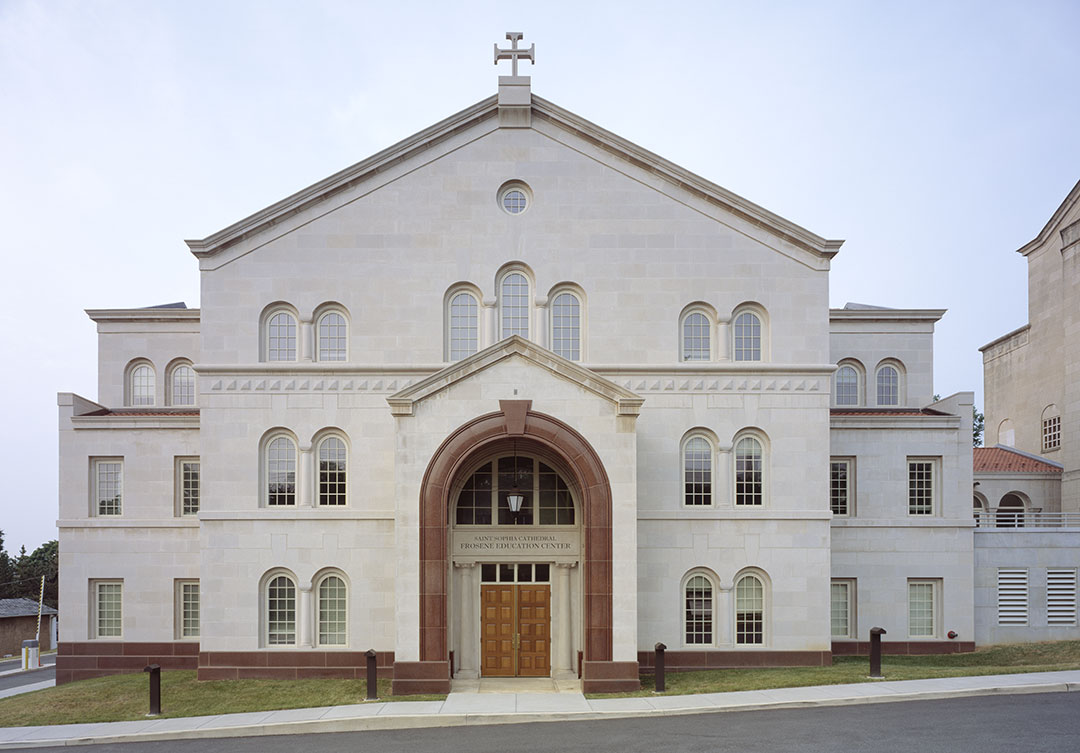
How Stone Carving Elevates the Aesthetic and Spiritual Experience of Churches
How Stone Carving Elevates the Aesthetic and Spiritual Experience of Churches
Stone carving for churches is not a legacy practice. It is a high-impact design strategy that drives both architectural distinction and spiritual engagement. In today’s church stone design landscape, religious stonework operates as a convergence point between heritage craftsmanship and modern construction performance. For stakeholders focused on long-term value, identity, and experiential depth, stone carving delivers a differentiated outcome that standard materials cannot replicate.
A Strategic Foundation: Stone as a Medium of Permanence
Stone has consistently positioned itself as the material of choice in church architecture due to its durability, structural integrity, and symbolic weight. Its presence communicates permanence, reinforcing the idea that the space is built to endure across generations.
From a design and stakeholder perspective, carved stone enhances architectural authority and visual hierarchy while supporting material longevity with reduced lifecycle replacement. It also reinforces institutional credibility and heritage alignment, making it an ideal material for sacred environments intended to serve communities for decades.
Driving Spiritual Engagement Through Design
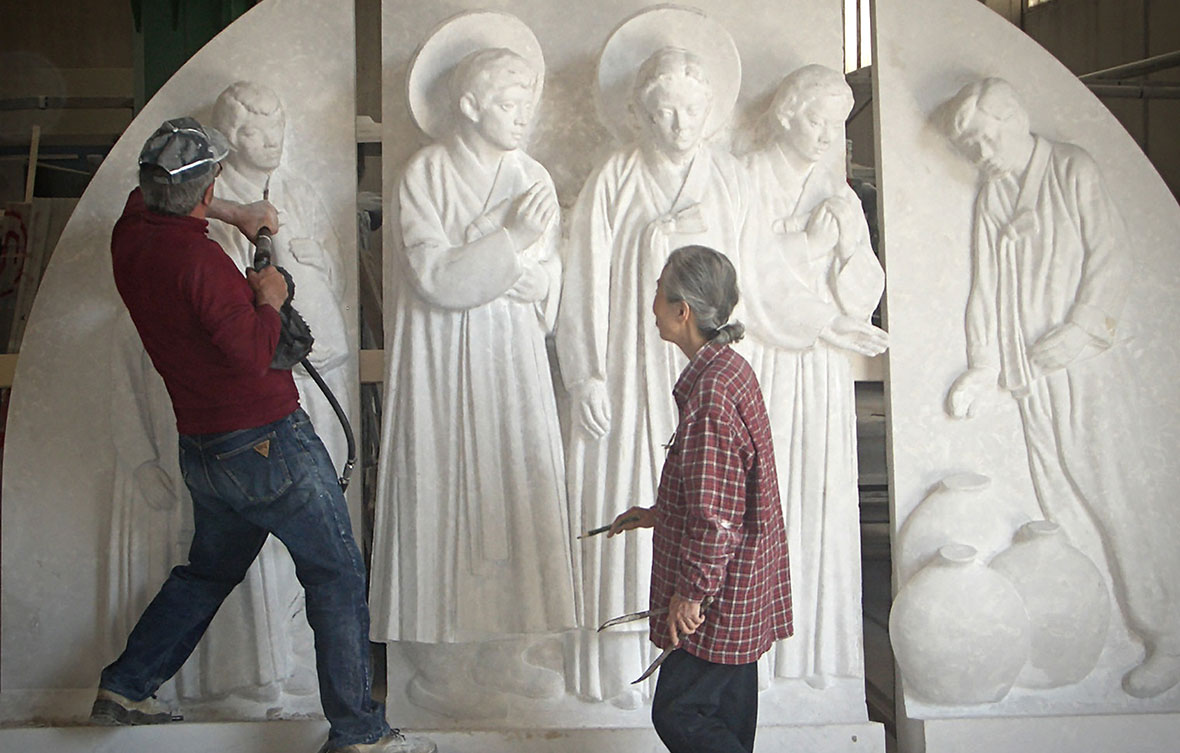
Stone carving functions as more than an aesthetic layer. It acts as a silent communicator of theology, guiding users through a sensory and emotional journey.
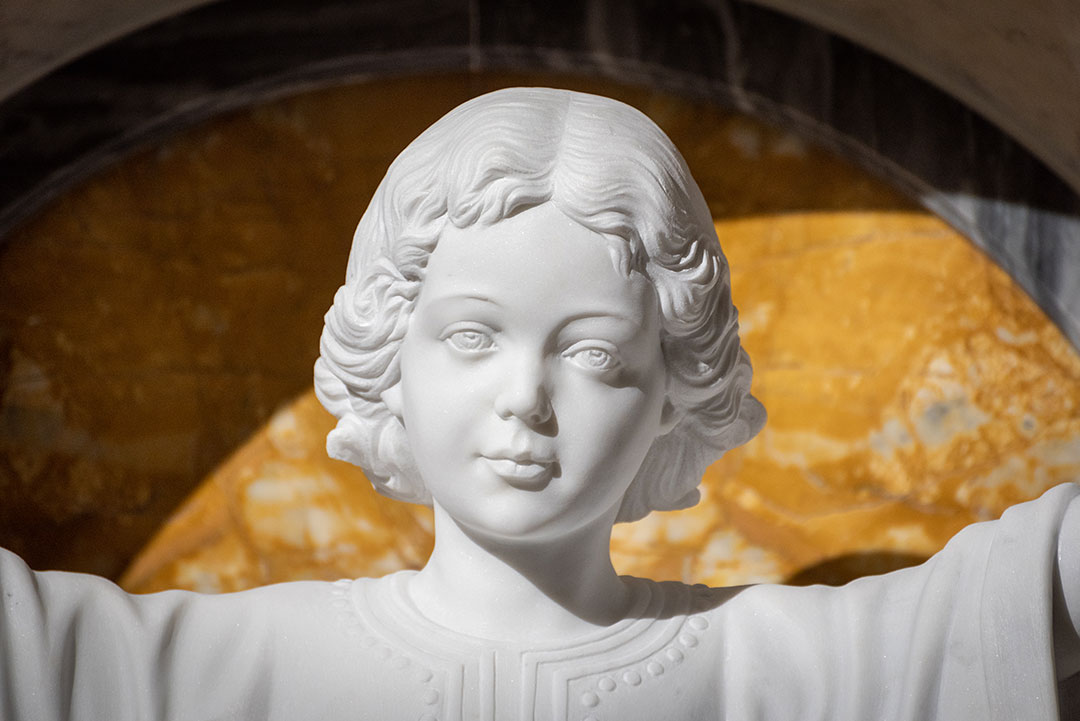
Carved elements such as altars, pulpits, tracery, and iconography anchor the worship experience by creating focal points that draw attention and foster reflection. These details strengthen emotional engagement, support liturgical focus and spatial orientation, and convert abstract beliefs into tangible visual narratives that worshippers can experience physically and emotionally.
Craft and CNC: A Dual Capability Advantage
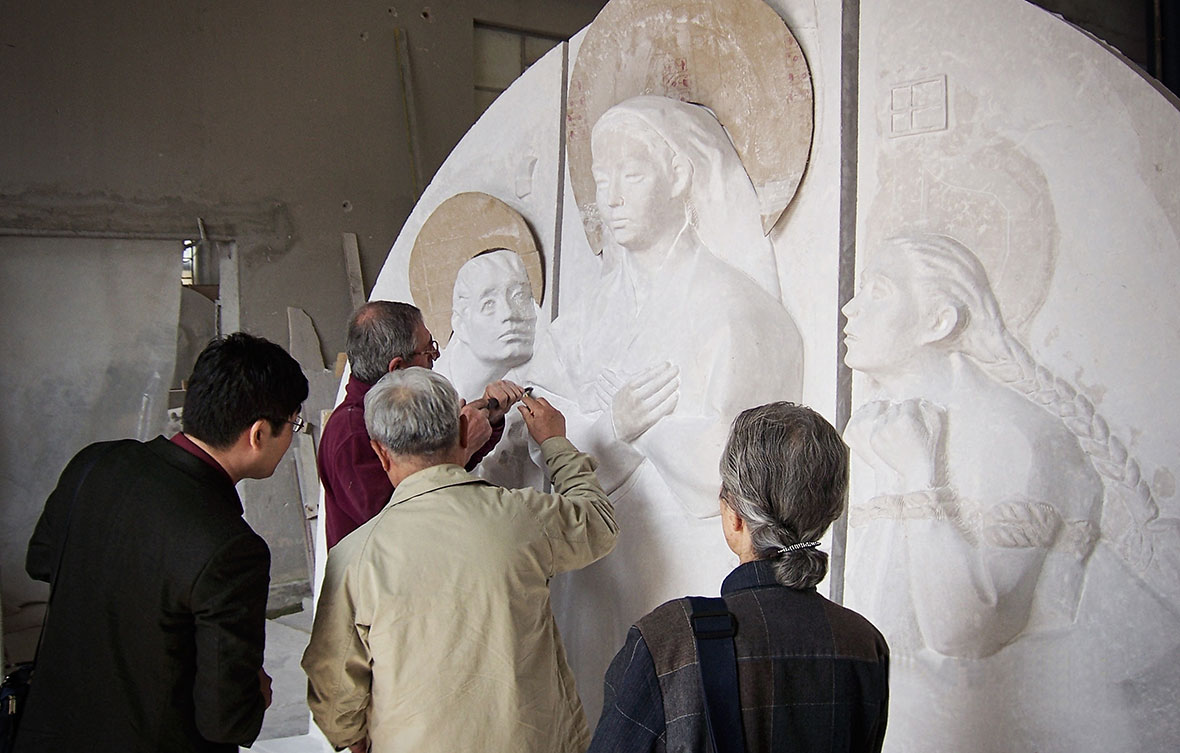
Modern church projects require both scalability and precision. This is achieved through a hybrid model that integrates advanced fabrication with artisan finishing.
This blended workflow ensures high tolerance accuracy for complex geometries while reducing production timelines without compromising craftsmanship. At the same time, it allows projects to align with modern structural and compliance requirements while preserving the authenticity of handcrafted stonework.
Bridging Tradition and Modern Church Design
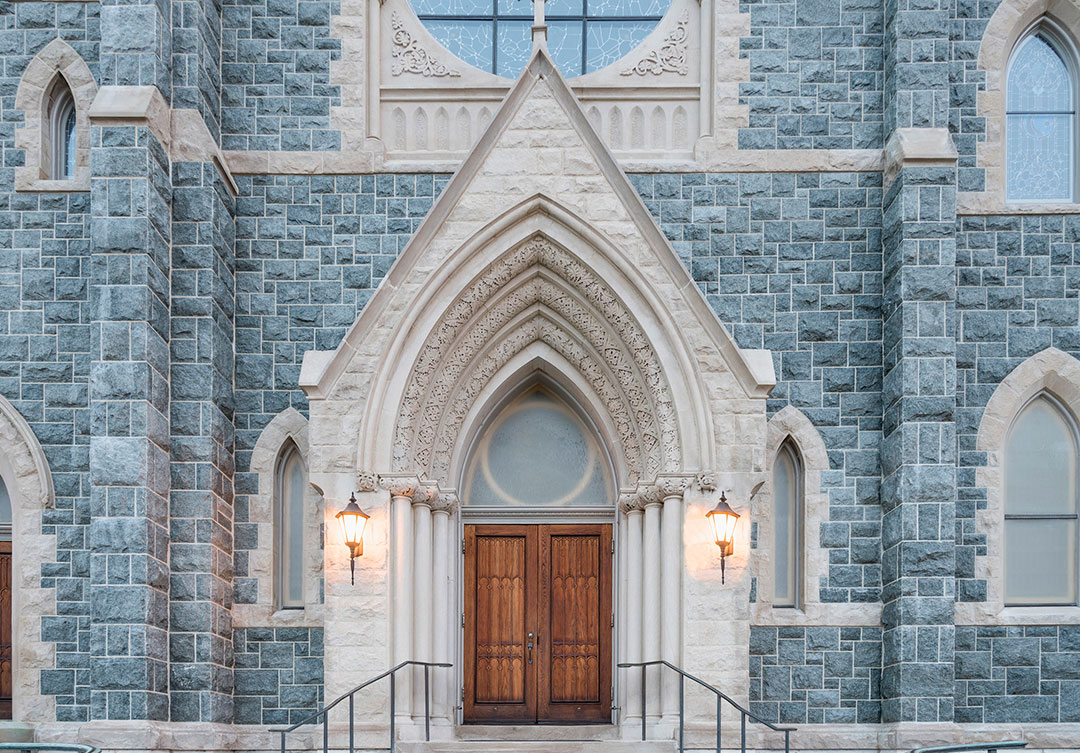
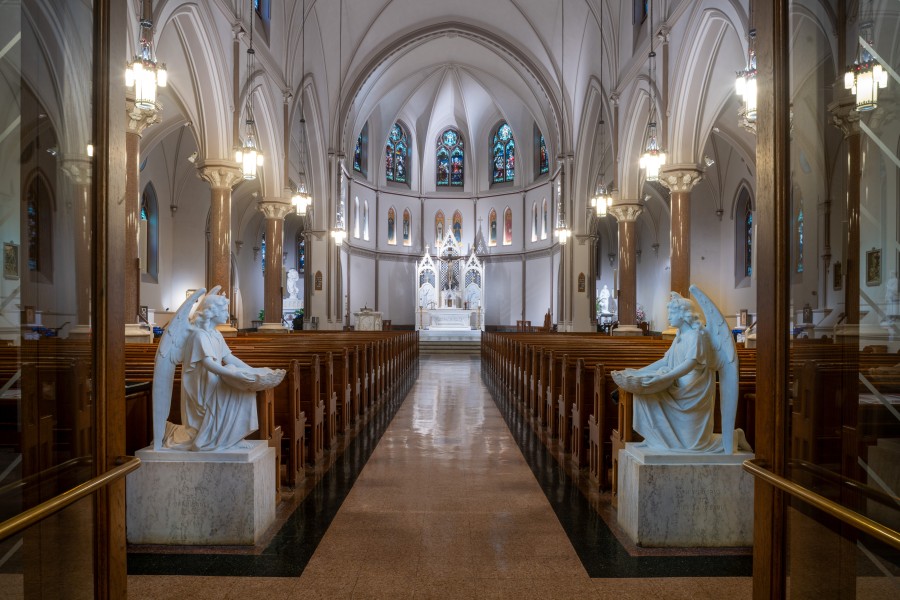
A key trend in church stone design is the integration of historical styles within modern architectural frameworks. Gothic and Romanesque elements are being reinterpreted in contemporary spaces, creating a balance between tradition and innovation.
This approach enables heritage continuity without compromising modern usability. It also creates flexible design narratives tailored to community identity while elevating spatial aesthetics in a way that differentiates the structure architecturally and spiritually.
At Rugo Stone, carved stonework continues to help churches preserve the spiritual and historical language of sacred architecture while adapting to contemporary aesthetics and functionality.
Symbolism as a Built-In Design System
Religious stonework embeds symbolic meaning directly into the architecture. Each carved detail serves a purpose beyond decoration, reinforcing spiritual messaging and identity throughout the space.
This creates a consistent symbolic language across the structure while strengthening cultural and religious identity. It also enhances storytelling within the church environment, allowing architecture itself to communicate meaning and purpose.
Restoration and Lifecycle Value Optimization
Stone carving is also a critical enabler in restoration and preservation projects. Many historic churches rely on skilled carving to maintain authenticity while upgrading structural performance.
With advanced tools such as digital scanning and replication modeling, restoration workflows now support accurate reproduction of legacy details while extending asset lifecycle and reducing deterioration risk. These methods also help ensure compliance with heritage preservation and conservation standards.
Strategic Takeaway: Why Stone Carving Still Wins
In a market increasingly driven by cost efficiency and prefabrication, stone carving provides a clear competitive advantage for churches seeking long-term value and differentiation.
It delivers aesthetic ROI through premium visual identity and architectural impact, spiritual ROI through enhanced engagement and experiential depth, and operational ROI through durability, sustainability, and lifecycle efficiency.
Conclusion
Stone carving for churches is not a legacy expense. It is a high-value investment in permanence, identity, and spiritual resonance. By integrating traditional craftsmanship with modern fabrication, churches can create environments that are not only visually compelling but deeply meaningful.
Explore how precision-driven religious stonework can transform your next church project into a landmark of faith, craftsmanship, and architectural excellence.

Related Posts