Why Precision Matters: The Role of Master Stone Carvers in Complex Restoration Projects As we…
The Impact of Stone Carving on Modern Church Design
The Impact of Stone Carving on Modern Church Design
When you step into a church, whether centuries old or newly built, you immediately sense the difference that stone makes. Its permanence, weight, and artistry tell a story of faith made visible. Stone carving continues to shape the way churches are designed in the modern era—not just as a nod to tradition, but as a living expression of craftsmanship, devotion, and community identity.
A Legacy Rooted in Tradition
Churches have always turned to stone as their medium of choice. From Gothic cathedrals with soaring tracery to Renaissance Basilicas with intricate altars, stone carving was central to conveying both grandeur and sacred symbolism. Today, while construction techniques have evolved, the demand for artistry in stone remains. At Rugo Stone, our carvers continue this lineage, hand-shaping marble, limestone, and granite with the same discipline that guided artisans hundreds of years ago—yet applying it to contemporary spaces that reflect modern liturgical needs.
Carving as a Bridge Between Old and New
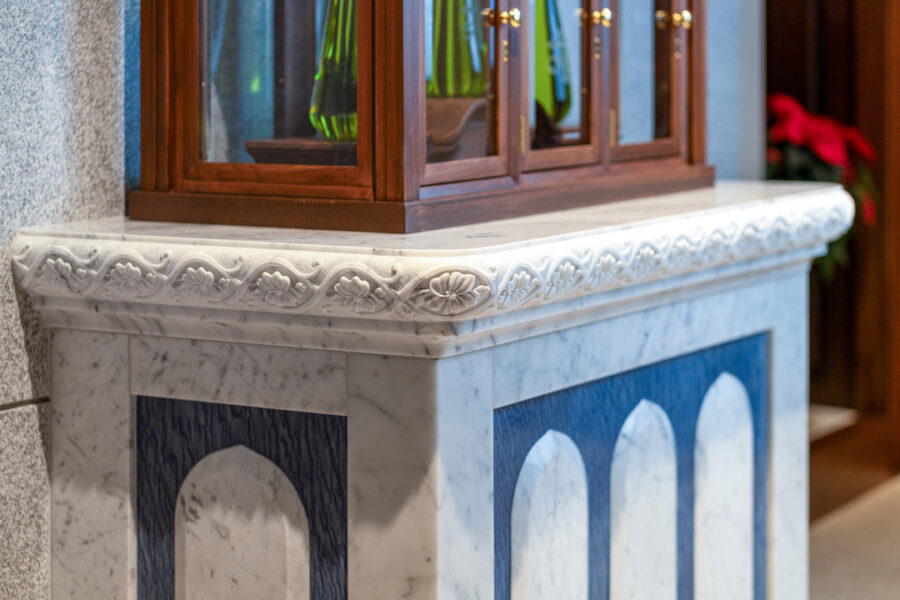
One of the fascinating aspects of modern church design is the blending of old-world artistry with current architectural vision. For example, many of our projects involve crafting Gothic or Romanesque-inspired elements—arches, tracery, capitals—but setting them within streamlined, light-filled sanctuaries. This contrast gives parishes the best of both worlds: a sense of rootedness in tradition and an openness to modern worship practices.
Clients are often reminded that a carved altar, pulpit, or baptismal font is not just decoration—it’s a tactile, enduring focal point. These pieces draw the eye, center the liturgy, and embody permanence in a world of constant change.
Technical Precision Meets Spiritual Symbolism
Modern carving also means working with advanced technology. Our team at Rugo Stone uses 3D scanning, modeling and CNC machinery to rough out complex forms, achieving efficiency and ensuring accuracy. But no machine replaces the eyes and hands of a master carver. Final shaping, polishing, and detailing still require the artisan’s touch—what we call the “soul” of the stone. This marriage of technology and artistry allows us to deliver carvings that meet both the structural demands of modern architecture and the spiritual aspirations of the congregation.
Stories in Stone
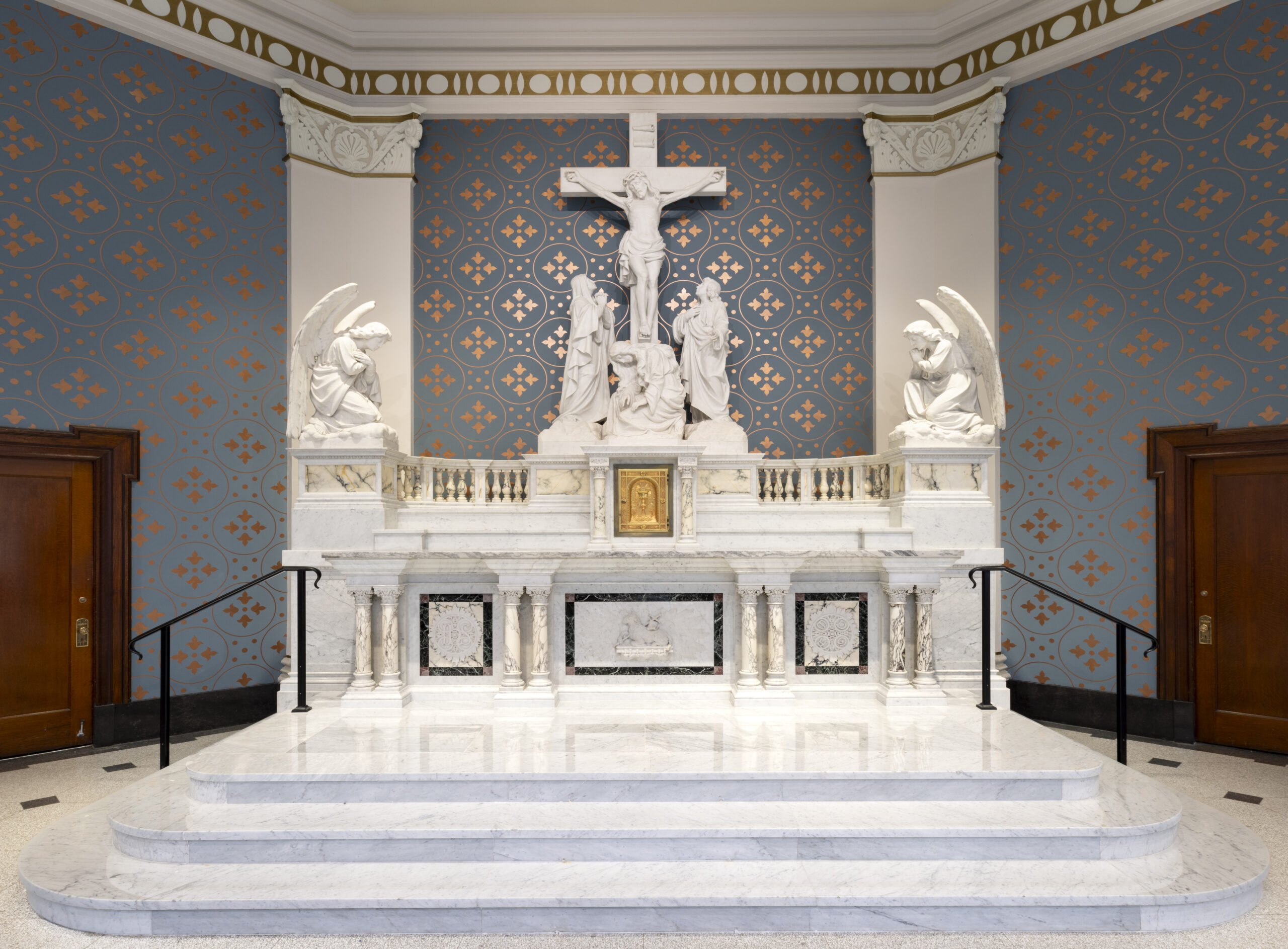
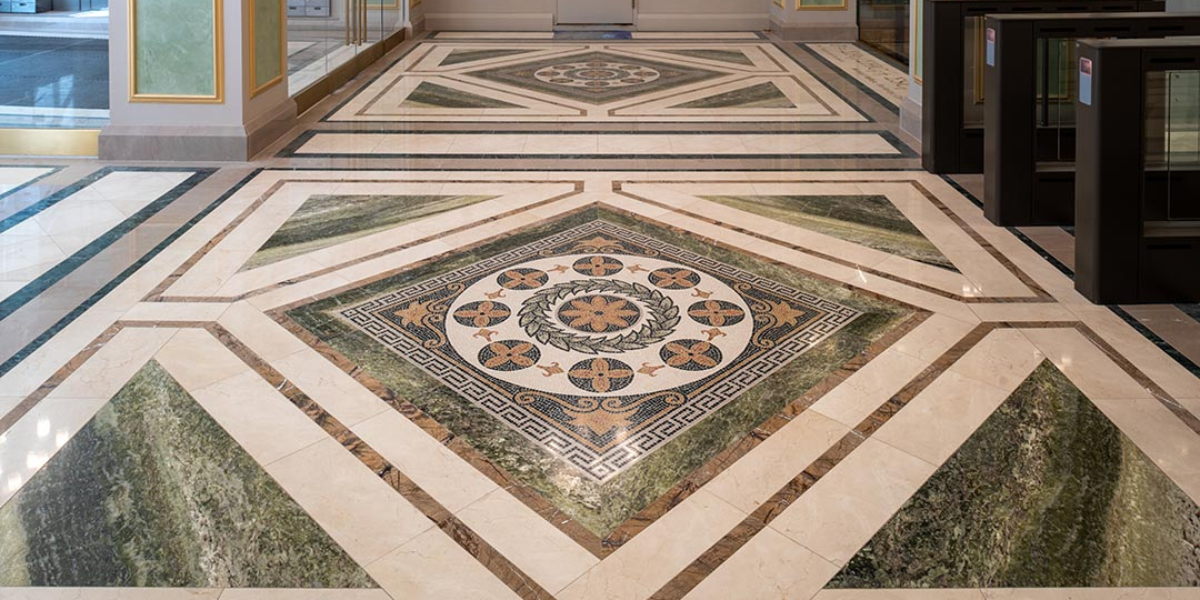
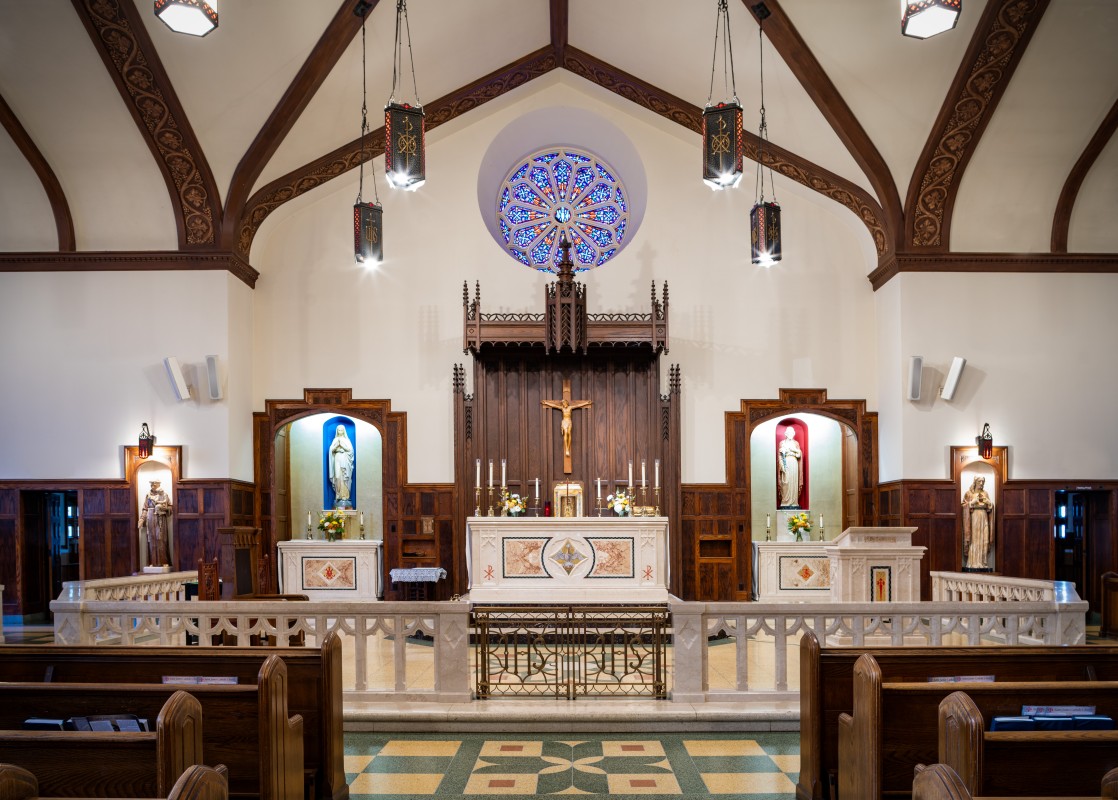
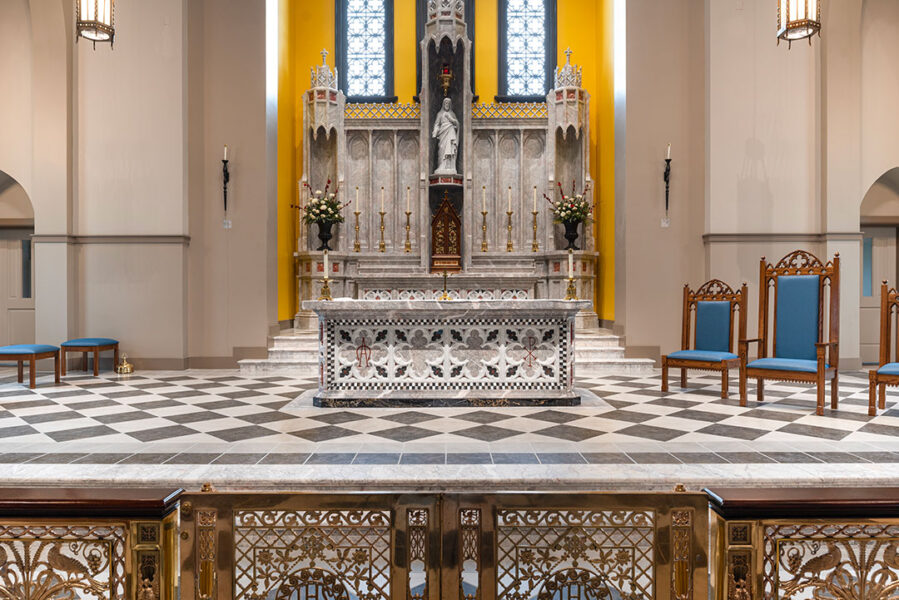
It is amazing how carved stone transforms sacred spaces. In Corpus Christi Catholic Church, for example, our team created intricate Gothic tracery and marble inlaid altar. These elements weren’t just aesthetic—they embodied the parish’s identity, creating a sacred environment that felt both timeless and alive. Similarly, at Trinity Church Wall Street, our restoration of marble carvings and mosaics preserved centuries of history while ensuring the church could continue serving its community in the heart of Manhattan.
Why It Still Matters Today
In an era where building materials often lean toward the temporary, stone carving tells a story. It tells congregations and communities: “This place is built to last.” It honors the sacred with permanence, beauty, and artistry that elevates the experience of worship. For me, the greatest impact of stone carving on modern church design is its ability to remind us that faith is not just an idea—it’s something we can see, touch, and be inspired by for generations to come.
At Rugo Stone, we carry forward this mission every day, blending ancient techniques with modern tools to create spaces that honor the sacred and uplift the human spirit. And when one walks into one of these completed churches, they know that the stone itself will preach a silent sermon long after we are gone.

Related Posts